
The National Institute of Standards and Technology (NIST) defines cloud computing as a way to easily access shared computing resources, like servers and storage, over a network whenever needed. These resources can be quickly set up or taken down with little effort. NIST also points out that cloud computing has five key features, three types of services, and four ways it can be set up.
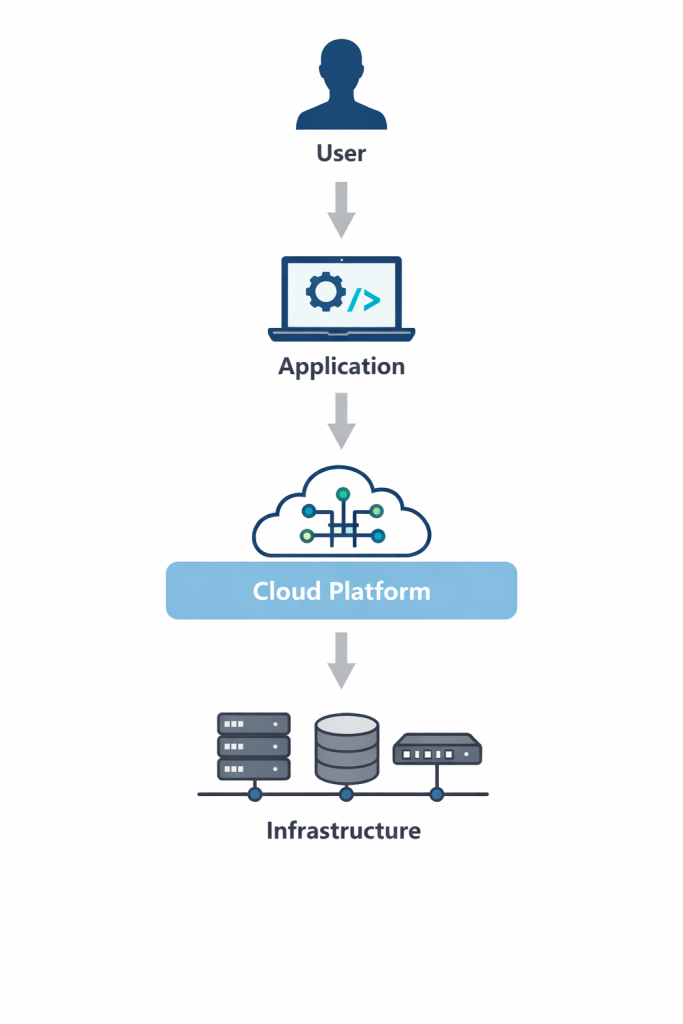
But cloud computing is more than just servers, storage, and networks. It changes how teams build and deliver technology. With on-demand access to infrastructure, teams can work much faster than in traditional setups that require slow approval and procurement steps. Amazon Web Services (AWS) says that using the cloud speeds up innovation and requires a new way of managing finances to get the most business value.
Cloud computing is now more than just a technical change; it also changes how organizations work. Features like speed, flexibility, and less hassle with infrastructure make the cloud attractive, but they also bring new challenges, especially with tracking costs and making decisions. For example, the AWS Well-Architected Framework treats Cloud Financial Management as its own area, helping organizations build skills in cost awareness, budgeting, and optimization, instead of seeing cloud costs as fixed expenses.
So, cloud computing is more than just renting infrastructure online. It takes away much of the day-to-day work, letting teams focus on building and delivering systems. Still, this doesn’t remove all complexity. Instead, it often moves challenges into areas like system design, reliability, and managing costs. Google’s Site Reliability Engineering (SRE) points out that cloud systems can still face complicated failures, especially when hidden connections and overloads spread between services.
Sources:
- NIST – The Definition of Cloud Computing
- AWS Well-Architected Framework
- Google SRE Book